A furnace that had to become a front door
Identity and wayfinding for a steelworks that stopped making steel and started taking visitors.
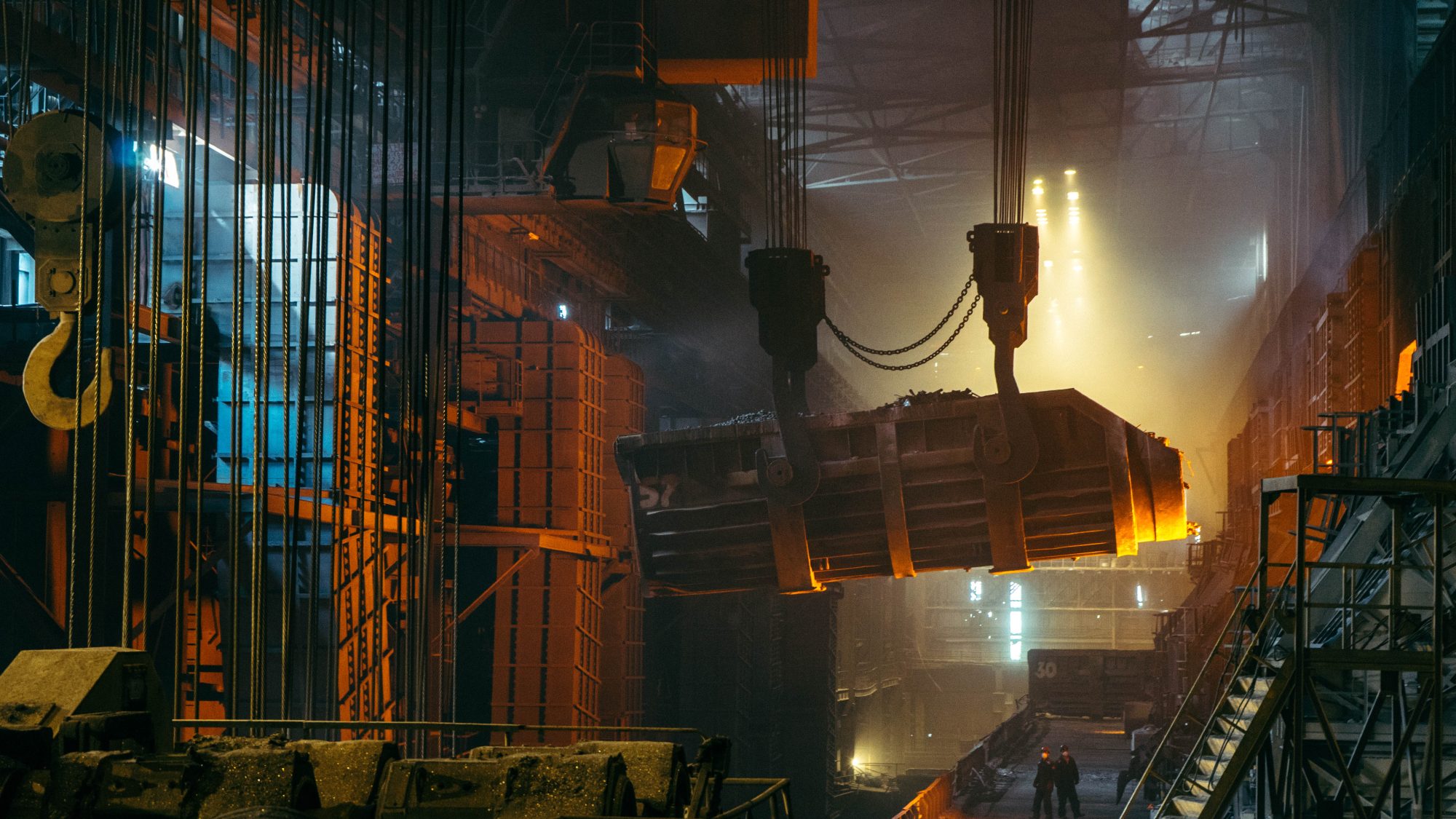
Cordell poured its last heat in 1987 and stood empty for thirty years. The trust that took it on has a scheduled monument, eleven standing structures, a river frontage, and a legal obligation to keep most of it looking exactly as it does.
That obligation is the whole design problem. You cannot fix signs to a scheduled structure. You cannot repaint, you cannot drill, and in four of the eleven buildings you cannot install anything that would be visible from the river.
So nothing is attached to the buildings. The wayfinding is a family of free-standing steel markers, fabricated by the trust’s own volunteer workshop from stock the site already had, weighted rather than fixed, and detailed so that they read as plant rather than as museum furniture. Where a marker could not stand, the route is cut into the ground surface instead.
The identity came out of the same constraint. The trust wanted a logotype; what it needed first was a decision about what the place is called now that it no longer makes anything. We spent the first six weeks on that question and the remaining eight months on everything downstream of the answer.
Two of the eleven buildings still have no interpretation at all. The trust and we agreed to leave them silent, on the grounds that a site which explains everything stops being a place and becomes a display.
What changed
The site opened with one route that works in the wet and one that does not require stairs, and the trust can add a building to the map without redrawing it. Visitor dwell time is roughly double the trust's original projection.
Everyone who pitched wanted to make it look like a museum. The point was that it should still look like a works.